Bedding · Fabric & feel
Percale or Sateen? How Cotton Weaves Change the Feel of Your Bedding
The difference between a bed that feels crisp and cool and one that feels smooth and softly luminous often begins not with the cotton itself, but with the way its threads are woven. Percale and sateen are two classic cotton weaves, each bringing a distinct hand, appearance, and rhythm to everyday bedding.
Published October 10, 2026
Few bedroom decisions are as intimate as choosing the fabric closest to your skin. A duvet cover can set the mood of a room; a pillowcase can shape the small, familiar rituals of bedtime. Yet when labels offer a parade of thread counts, fiber descriptions, and finishes, it is easy to overlook the detail that most directly affects the way cotton feels: its weave.
Percale and sateen are both cotton weave styles, not different varieties of cotton. Each can be made from quality fibers, and each can suit a beautiful, practical bed. Their essential distinction is structural. Percale’s balanced weave creates a crisp, matte surface; sateen’s arrangement of threads creates a smoother face with a gentle sheen. That difference influences drape and touch, and may shape how the bedding feels in a particular room or routine.
There is no universal winner. The right choice depends on whether you prefer a fresh, tailored sensation or a softer, silkier glide; whether you tend to feel warm at night; and how much attention you want to give laundry and pressing. Understanding the language of cotton bedding makes the decision less about a number on a label and more about the experience you want to create.
First, the weave: what percale and sateen mean
A weave describes how lengthwise and crosswise yarns interlace to form fabric. It is distinct from fiber content: cotton tells you what the yarn is made from, while percale or sateen tells you how those yarns are arranged. Fiber quality, yarn preparation, finishing, and construction all contribute to the final result, so two fabrics with the same weave name can still feel different.
Percale is typically woven in a simple, balanced pattern, with each yarn passing over and under the others in a regular sequence. This structure gives the fabric a crisp, even surface and a clean, matte appearance. It is often described as having a fresh or shirt-like hand—not stiff by definition, but more structured than sateen when new.
Sateen uses a different pattern that allows more yarn to appear across the fabric’s surface. The result is a smooth face with a subtle luster and a fluid drape. That surface can feel supple and soft against the skin. The sheen is generally restrained rather than glossy, though its visibility varies with the yarn, finish, and light in the room.
These are not statements about quality. Percale is not automatically superior because it feels crisp, and sateen is not automatically more luxurious because it has a sheen. Both can be finely made; both can be disappointing if the fiber or construction is poorly suited to your needs. A considered choice starts with preference and moves on to the details of the particular piece.
Percale: a crisp, composed kind of comfort
Percale has a quiet confidence. Its matte finish looks clean and unfussy, and its lightly structured hand gives a bed a sense of order. For sleepers who like the feeling of slipping between freshly laundered sheets, percale may have particular appeal. It is also a natural match for a pared-back bedroom, where texture and proportion do more than shine to create visual interest.
Because the surface feels crisp and the weave is generally breathable, percale is often favored by people who prefer a cooler-feeling bed. That is a useful preference cue, not a guarantee of a particular sleeping temperature. Room climate, duvet fill, mattress materials, sleepwear, and individual comfort all matter. The entire bedding arrangement—not one pillowcase or duvet cover—contributes to the feel of the bed.
New percale can feel firmer or crisper than expected, especially if you are accustomed to a silkier fabric. With regular laundering, many cotton percale fabrics soften while retaining their characteristic clean, matte feel. The degree and pace of change depend on the cotton, construction, finishing, and care. If you like a soft surface but do not want sateen’s more fluid hand, percale can be a satisfying middle ground as it settles into use.
One example is the Bovi Nazaré Percale Pillowcases and Shams, made from 100% cotton percale with a crisp, matte finish and scalloped edging. The fabric is described as 200 thread count and machine washable; its standard or king pillow pieces offer a way to introduce percale at the place where texture is most immediately noticeable. The coordinated Bovi Nazaré Percale Duvet Cover uses the same cotton weave and adds a scalloped edge, bringing that fresh, tailored finish across the bed.
Sateen: smoothness with a soft glow
Sateen offers a different kind of invitation. Its smooth surface has a soft, almost liquid hand, while a gentle sheen catches ambient light and gives color a little more dimension. On a bed, that subtle luminosity can feel polished without looking formal. Sateen tends to drape more fluidly than percale, making it a natural choice for anyone drawn to a soft, enveloping finish.
Many people associate sateen with warmth because it can feel smoother and more substantial in the hand than crisp percale. That perception can be useful when choosing bedding, but weave alone cannot predict how warm a person will feel overnight. Cotton sateen remains cotton, and the complete fabric’s weight and construction matter. Consider the season, the room, the duvet insert, and your own comfort rather than treating “sateen” as a temperature rating.
The surface that makes sateen feel so sleek also calls for sensible handling. As with any cotton textile, repeated friction, harsh washing, excessive heat, or care that conflicts with the label can affect appearance and longevity. Follow the maker’s directions and choose a gentle routine suited to the item. A soft sheen can be lovely, but it should never be mistaken for a promise that a fabric needs elaborate care—or that it will be entirely crease-free.
Sateen suits those who favor smoothness over crispness and a touch of visual glow over a strictly matte finish. It can also bring warmth and softness to a room that otherwise feels austere: layered with a nubby coverlet, a plain cotton sheet, or a textured throw, its polished surface becomes one note in a more nuanced composition.
Thread count is only one part of the story
Thread count is often presented as shorthand for comfort, but it does not tell the whole story. It generally refers to the number of threads counted within a defined area of fabric, though counting practices and yarn construction can complicate comparisons. A larger number does not automatically mean a better sheet, a softer hand, or a more durable weave.
Look at thread count alongside fiber quality, yarn, weave, finishing, and construction. A well-made cotton percale at a moderate count may feel more appealing to someone who values crispness than a denser fabric with a smoother finish. A sateen’s appeal may come from its surface and drape rather than from a headline number. The most useful specification is the one that helps you understand how the textile is likely to feel and how it should be cared for.
Fiber length is another useful detail when it is clearly stated. Long-staple and extra-long-staple cotton refer to fibers that can be spun into finer, stronger yarns, depending on how they are processed and woven. These descriptions can provide context, but they are not a substitute for evaluating the finished fabric. A beautifully named fiber or a high numerical claim cannot reveal touch as reliably as a fabric swatch or a trusted, specific product description.
For shoppers comparing bedding, read the complete label rather than isolating a single feature. Confirm fiber content, weave, finish, country or method of production when provided, and care instructions. Look for a description that explains the fabric plainly. If the information is vague, avoid assuming that an impressive-sounding count or finish guarantees a particular level of comfort.
Choose by touch, temperature, and routine
Start with the sensation you already know you enjoy. If you like a crisp cotton shirt, a freshly made hotel bed, or a matte, clean surface, percale may feel intuitive. If you gravitate toward a smooth blouse, a gentle sheen, and a softer drape, sateen may be closer to your ideal. These comparisons are not exact—the way a fabric feels depends on its construction—but they can help turn an abstract textile choice into a more familiar one.
- Choose percale if: you prefer a crisp hand, a matte finish, and a neatly tailored look; you tend to seek a cooler-feeling surface; or you appreciate cotton that relaxes gradually with use.
- Choose sateen if: you enjoy smoothness, a gentle sheen, and a more fluid drape; or you want bedding with a softly polished appearance.
- Consider both if: you share a bed with someone who prefers a different texture, or you like to change layers and fabrics with the season.
Your laundry routine deserves a place in the decision. Check the care label before buying and consider whether the recommended wash and drying instructions fit your household. Many cotton bedding pieces are machine washable, but the temperature, cycle, drying method, and finishing instructions differ. A duvet cover may also need more care simply because of its size, while pillowcases are washed more frequently and can be a useful place to test a new fabric.
If you are uncertain, start with a small piece rather than rebuilding the entire bed. Pillowcases let you experience the fabric close to your face and hands; a top layer can change the look and feel of the bed without replacing every sheet. Give a new textile time to settle, follow its care guidance, and notice how it feels after several washes—not only on the first night.
Make the weave part of the room’s design
Bedding is both a tactile choice and a visual one. Percale’s matte surface often reads as crisp and architectural, particularly in white, pale blue, or restrained neutrals. It pairs naturally with sharp borders, embroidered details, and graphic patterns. The effect can be relaxed or formal depending on the palette and the way the bed is layered.
Sateen’s soft sheen can make solid colors feel richer and bring a subtle sense of movement to a plain duvet. It works well beside dry, textured materials—linen, matelassé, knitted cotton, or a woven throw—because contrast gives each surface room to register. A bed need not be made from one fabric family. The pleasure often lies in balancing a smooth pillowcase with a crisp sheet or a softly quilted coverlet.
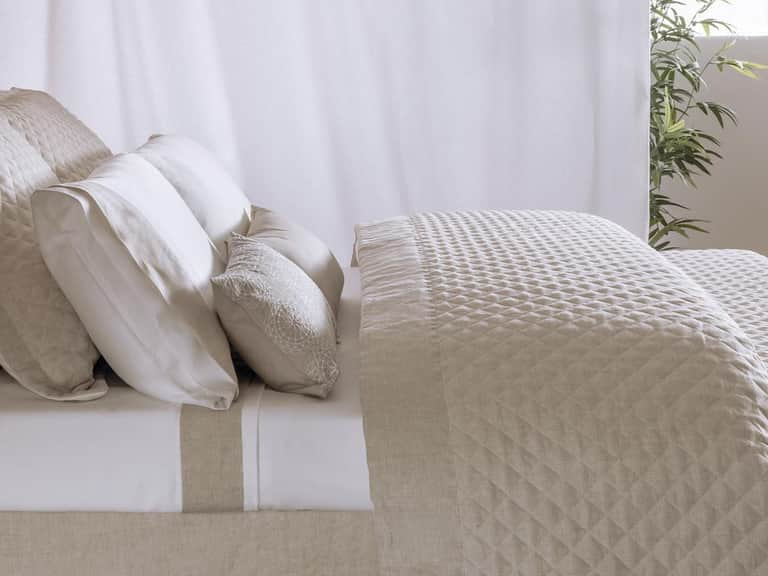
For instance, a cotton percale duvet cover can sit comfortably beside the natural texture of the Bovi Hudson Linen Quilted Coverlet. The coverlet is made from European linen and backed in cotton percale, so it brings a relaxed, dimensional layer while echoing the cool, crisp character of percale on its reverse. This is not a reason to match every surface exactly; rather, it shows how changes in weave and fiber can add quiet depth to an ensemble.
Details matter, but they should support the fabric rather than distract from it. Scalloped edging, a plain hem, embroidery, or a quilted pattern can change the mood of a bed. A restrained trim makes percale feel especially tailored; a smooth sateen field can give decorative stitching a subtle frame. Think about how the finish meets the rest of the room, from the bed frame to the curtains, as well as how it will look after regular use.
A practical guide to care and longevity
Good care starts with the instructions supplied for the specific piece. Cotton percale and sateen do not all share identical finishes, dye methods, or construction, so a blanket rule cannot replace the label. As a general habit, sort colors thoughtfully, avoid overloading the washer, and use a cycle and detergent appropriate to the fabric. Follow guidance about bleach, fabric softener, drying temperature, and ironing rather than assuming that every cotton textile responds the same way.
Removing bedding promptly after drying can help limit set-in creases. If you prefer a smooth, crisp presentation, ironing or steaming may be appropriate when the care label allows it. If a lived-in look is more your style, careful laundering and a lower-heat drying method may be enough. Sateen’s sheen and percale’s matte finish are properties of the fabric, not invitations to use aggressive products or excessive heat.
Wash pillowcases and duvet covers as often as your household routine requires, and make sure larger pieces have room to move in the machine. A duvet cover with a secure closure is easier to manage when changing the bed; ties or other internal fastenings, if included, can help keep an insert in position. Store clean bedding fully dry in a cool, ventilated space. These uncomplicated habits do more for the life of bedding than chasing a fashionable thread-count figure.
Creasing is another point of difference, though it is not a simple test of quality. Cotton can wrinkle, and how visibly it does so depends on the weave, finishing, drying, and how the bed is made. Percale’s crisp character may make creases more noticeable to some; sateen’s fluid drape may soften the appearance of folds. If immaculate smoothness is essential, factor in the time you want to spend on finishing. If ease matters more, choose a texture whose natural look feels appealing rather than treating every crease as a flaw.
Common misconceptions, gently dispelled
“Sateen is satin.” They are related in the sense that both names refer to weave structures with a smoother face, but cotton sateen is not silk satin. Sateen is commonly made from cotton and has its own particular hand and appearance. Always check the fiber content rather than inferring material from the weave name.
“Percale is rough.” A crisp first impression is not the same as roughness. The sensation varies by fabric and may soften over time. If possible, feel a swatch, or begin with a single pillowcase before committing to an entire bedding set.
“A higher thread count always means better bedding.” Thread count is one specification, not a complete assessment of comfort or quality. Weave, yarn, fiber, finishing, and construction all contribute to the experience.
“One weave is right for every sleeper.” Texture is personal. Even people with similar routines can prefer opposite surfaces. The best bedding is the bedding that feels comfortable to you, suits your care habits, and works with the rest of your sleep setup.
The final choice: crisp or smooth?
When the labels and numbers recede, the decision becomes pleasingly simple. Percale offers a crisp, matte, freshly composed feel. Sateen brings smoothness, a softer drape, and a gentle glow. Each is a distinct interpretation of cotton, and each can be beautiful when the fiber, construction, finish, and care are considered together.
Think about the way you like your bed to feel when you first slip beneath the covers. Think about whether you seek a fresh sensation or a more enveloping one, whether you prefer a quiet matte surface or a hint of sheen, and how much laundry care fits naturally into your week. If you still cannot decide, combine textures: choose the weave you most want against your skin, then layer the other character into a coverlet, throw, or accent piece.
There is no need to make a bedding purchase more complicated than comfort requires. Learn the weave, look beyond thread count, read the care label, and trust your own hand. The most elegant bed is not the one with the most impressive specifications; it is the one that feels considered, inviting, and unmistakably your own.
At a glance
- Percale and sateen describe cotton weave styles, not different cotton fibers.
- Percale is generally crisp and matte; sateen is generally smoother, more fluid, and softly lustrous.
- Neither weave is automatically better. Fiber quality, construction, finishing, and personal preference matter.
- Thread count is useful context, but it cannot predict comfort on its own.
- For the best fit, consider touch, room temperature, bedding layers, and care instructions together.